
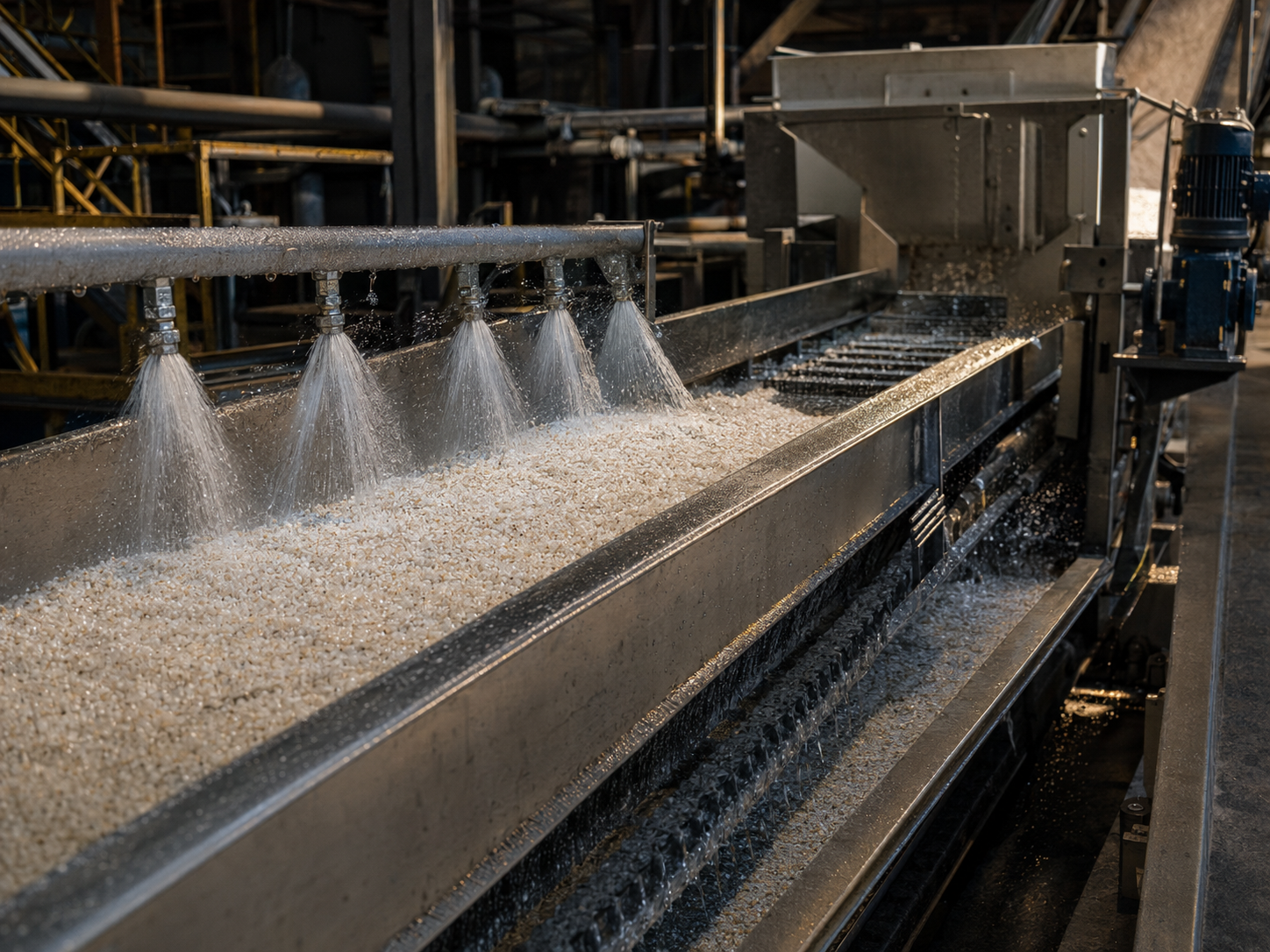
Why quartz sand is washed
Natural sand may contain clay, dust-sized particles, organic matter and other impurities. These can affect material cleanliness, make size separation more difficult and reduce the consistency of the finished product.
Washing separates the quartz grains from material that should not enter the finished fraction. This is particularly important for water treatment, construction mixes, polymer systems and decorative coatings.
How the process works
Raw material is fed into specialised equipment, where sand is mixed with water. Water flow and mechanical action help separate clay, organic matter and excess fines from the main quartz grain.
After cleaning, the material is separated from the water and transferred to the next production stage. Equipment operation is adjusted to the properties of each incoming raw-material batch.
- consistent feed to the washing line;
- removal of clay and organic inclusions;
- separation of excess fine particles;
- preparation for stable drying.
Why it matters to the finished product
Properly washed sand is easier to dry and more accurately separate into fractions. Reducing unwanted impurities also supports more consistent material from one batch to the next.
Washing is not simply a feature of the final product. It is the foundation for the entire processing cycle that follows.